
The Trump Administration’s Pushback Against a Global Shipping Carbon Levy
The International Maritime Organization (IMO), the United Nations agency tasked with regulating global shipping, has proposed an international carbon pricing scheme on shipping. The maritime shipping sector has increasingly faced global scrutiny as the contributor of 3% of global greenhouse gas emissions, and IMO’s proposed mechanism would serve as the first global emissions pricing mechanism affecting the shipping sector.


D.C. Circuit Upholds U.S. EPA’s HFC Cap-and-Trade Program Under AIM Act
On August 1, 2025, the U.S. Court of Appeals for the D.C. Circuit upheld the U.S. Environmental Protection Agency’s (EPA) authority under the American Innovation and Manufacturing (AIM) Act to phase down hydrofluorocarbons (HFCs) through a cap-and-trade program. In IGas Holdings, Inc. v. EPA, No. 23-1261, a unanimous panel rejected constitutional and administrative law challenges from refrigerant industry members, finding that the AIM Act provides a clear “intelligible principle” to guide EPA’s allowance allocation. The Court also held that EPA’s decision to exclude 2020 market data from its allocation methodology was not arbitrary and capricious.




Congress Eliminates Corporate Average Fuel Economy (CAFE) Penalties for Passenger Cars and Light Trucks
In one of its many changes, the One Big Beautiful Bill Act, enacted on July 4, 2025, eliminated civil penalties for noncompliance with federal fuel economy standards. Specifically, Section 40006 of the Act amends the language of the Corporate Average Fuel Economy (CAFE) statute to reset the maximum civil penalty to $0.00. Although the statute and its implementing regulations otherwise remain in place, this amendment removes any civil penalties for producing passenger cars and light trucks that do not meet fuel economy requirements.

EPA Updates Clean Air Act Standards Applicable to Small Waste Incinerators
On June 30, 2025, the U.S. Environmental Protection Agency (EPA) finalized updates to its New Source Performance Standards (NSPS) and Emission Guidelines for Other Solid Waste Incineration (OSWI) units under the Clean Air Act (CAA). These units — combustion systems that incinerate solid waste from commercial or institutional sources not otherwise regulated under specific incinerator categories — include very small municipal waste combustors and institutional incinerators. The final rule includes applicability-related and definitional changes expanding the class of incinerators subject to NSPS, revises the OSWI subcategories and tightens emission limits for key pollutants. It also adopts changes to startup, shutdown, and malfunction (SSM), and expands testing, monitoring, reporting, and recordkeeping requirements that will affect both existing and new OSWI units.

Top 5 Energy Actions You Should Know from President Trump’s First Day
On January 20, 2025, President Trump began his second term with the signing of 26 executive orders (EOs), which included the recission of almost 80 EOs of the previous administration. Trump’s orders contain both repeals of key Biden Administration policies and calls to agency action to reassess treatment of major energy issues associated with domestic energy production. Here are the top five actions to know from President Trump’s first day as the new administration begins its reshaping of U.S. energy policy for his second term in office.






Vermont and New York Climate Acts are First in a Wave of Likely Climate Change Cost Recovery Laws
On May 30, 2024, Vermont’s Republican governor, Phil Scott, allowed Vermont’s S 259 — also referred to as the “Climate Superfund Act” — to become law without his signature. The stated goal of this law is to mitigate the impacts of climate change.



The Newest Phase of EPA’s Greenhouse Gas Emissions Standards: Phase 3
On March 29, 2024, the U.S. Environmental Protection Agency (EPA) announced its most recent national greenhouse gas (GHG) pollution standards for heavy-duty (HD) vehicles, including HD vocational vehicles and tractors. The rule establishes new CO2 emission standards for model year (MY) 2032 and later HD vehicles, with more stringent CO2 standards phasing in as early as MY 2027 for certain vehicle categories.


U.S. Department of Transportation Announces $623M in Grants for Electric Vehicle Infrastructure
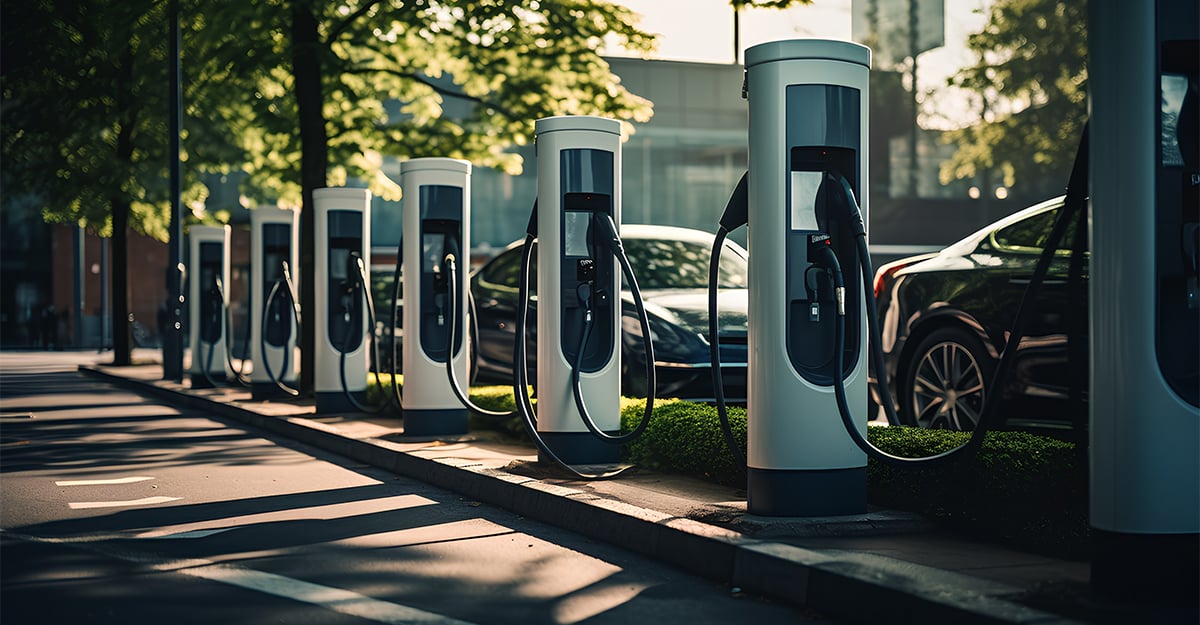
On January 11, 2023, the Department of Transportation (DOT) announced $623M in grants to expand electric vehicle (EV) charging infrastructure. The grants are part of the Infrastructure Investment and Jobs Act’s Charging and Fueling Infrastructure Discretionary Grant Program and have been made available to fund 47 EV charging and alternative fueling infrastructure projects in 22 states and Puerto Rico. Ranging from $500,000 to about $68.3M, 36 of the grants were awarded to EV charging and hydrogen fueling “community” projects in rural and urban communities, while the remaining 11 grants were awarded to “corridor” projects focused on fueling along roadways to assist in establishing national EV charging and alternative fueling networks.
Joint Office of Energy and Transportation Names Electric Vehicle Working Group Members
On August 3, 2023, the Joint Office of Energy and Transportation — created through the Bipartisan Infrastructure Law to facilitate collaboration between the U.S. Departments of Energy (DOE) and Transportation (DOT) — officially announced the members of its Electric Vehicle (EV) Working Group, an independent advisory board. Parties interested in the growth of EVs in the United States should take note of the group, which will coordinate and consult on the development, adoption, and integration of EVs into the transportation and energy systems of the United States.