
EPA Proposes Overhaul of Greenhouse Gas Reporting Program
On September 16, 2025, the U.S. Environmental Protection Agency (EPA) published a proposed rule that would fundamentally reshape the federal Greenhouse Gas Reporting Program (GHGRP). 90 Fed. Reg. 44591 (Sept. 16, 2025). If finalized, this action would mark a further shift in federal greenhouse gas (GHG) policy and advance the administration’s broader deregulatory agenda.


The Department of Transportation’s Spring 2025 Regulatory Agenda: Big Announcements on Autonomous Vehicles and Automatic Emergency Braking
On September 4, 2025 the National Highway Traffic Safety Administration (NHTSA) announced several planned rulemakings relating to autonomous driving systems as part of the Trump Administration’s Spring 2025 regulatory agenda. The Secretary of Transportation said: “The rules of the road need to be updated to fit the realities of the 21st century. Our changes will eliminate redundant requirements and bring us closer to a single national standard that spurs innovation and prioritizes safety.” The Department of Transportation’s regulatory agenda also has dozens of other items, including two notable actions on automatic emergency braking.


EPA Updates Clean Air Act Standards Applicable to Small Waste Incinerators
On June 30, 2025, the U.S. Environmental Protection Agency (EPA) finalized updates to its New Source Performance Standards (NSPS) and Emission Guidelines for Other Solid Waste Incineration (OSWI) units under the Clean Air Act (CAA). These units — combustion systems that incinerate solid waste from commercial or institutional sources not otherwise regulated under specific incinerator categories — include very small municipal waste combustors and institutional incinerators. The final rule includes applicability-related and definitional changes expanding the class of incinerators subject to NSPS, revises the OSWI subcategories and tightens emission limits for key pollutants. It also adopts changes to startup, shutdown, and malfunction (SSM), and expands testing, monitoring, reporting, and recordkeeping requirements that will affect both existing and new OSWI units.


President Trump’s Executive Order Seeks to Reduce Federal Regulation
President Trump’s January 31, 2025, Executive Order (EO) titled “Unleashing Prosperity Through Deregulation,” is a part of the new Administration’s broader policy to reduce federal regulation. The EO finds that federal regulations impose significant costs and complexities on American citizens and businesses that hinder economic growth, innovation, and global competitiveness – and it is the Administration’s policy to alleviate these burdens. This marks a policy change from the approach of the prior administration and is a broader effort than the regulatory reforms of the first Trump Administration.




States, Advanced Reactor Developer Challenge NRC’s Authority to License Advanced Reactors
The outcome of a lawsuit filed at the end of 2024 challenging the U.S. Nuclear Regulatory Commission’s (“NRC’s or the Agency’s”) authority under a 1956 rule to license certain nuclear facilities could have important implications for advanced reactor licensing processes and the supply of electricity in the U.S. in the years ahead.


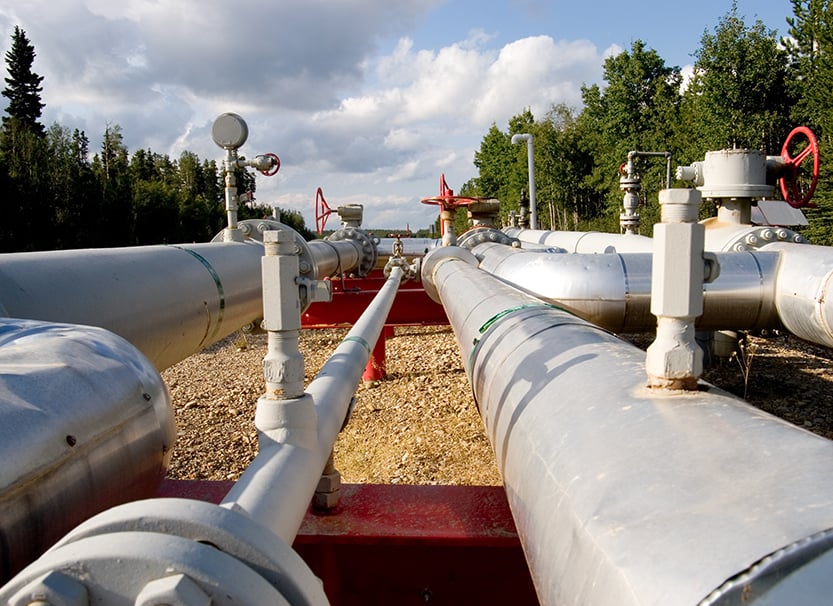
U.S. EPA Removes Regulatory Affirmative Defense Provision Against Alleged Violations of Oil and Gas Facility NESHAPs
On October 22, 2024, the U.S. Environmental Protection Agency (EPA) published a final rule removing an affirmative defense from Clean Air Act (CAA) National Emission Standards for Hazardous Air Pollutants (NESHAP) regulations for the Oil and Natural Gas Production Facility and Natural Gas Transmission and Storage Facility Source Categories (Final Rule).[1] Prior to the Final Rule, owners or operators could assert an affirmative defense that alleged NESHAP standard violations were caused by an equipment malfunction.[2] A “malfunction” is defined as any sudden, infrequent, and not reasonably preventable failure of air pollution control and monitoring equipment, process equipment, or a process to operate in a normal or usual manner.[3]




U.S. Fish and Wildlife Service Finalizes Changes to Voluntary Endangered Species Act Programs and Related Permitting Process
On Friday, April 12, 2024, the U.S. Fish and Wildlife Service (the Service) issued a Final Rule making changes to 50 CFR part 13 to clarify and expedite the process for issuing enhancement of survival permits and incidental take permits pursuant to Section 10(a)(1)(A) and (B), respectively, of the Endangered Species Act. The regulatory changes are intended to provide the Service greater flexibility in implementing the permitting process and generate greater conservation results by encouraging additional engagement in voluntary programs associated with these permits, including safe harbor agreements (SHAs), candidate conservation agreements with assurances (CCAAs), and habitat conservation plans (HCPs).

Southern District of Texas Enjoins New Waters of the United States Rule
On March 19, 2023, in Texas et al. v. EPA, the United States District Court for the Southern District of Texas issued an order enjoining the Environmental Protection Agency (EPA) and Army Corps of Engineers Waters of the United States (WOTUS) Rule in the states of Idaho and Texas. The injunction went into effect just one day before the WOTUS Rule was set to become final. Texas represents the latest in the multidecade saga of seeking to define the term “waters of the United States” in the context of the Clean Water Act (CWA). Moreover, Texas is just one hurdle EPA’s new WOTUS Rule faces, with a pending Supreme Court case (Sackett v. EPA) and potential congressional action to block the rule both on the horizon.



Biden Administration Publishes Final Rule Redefining “Waters of the United States”
On January 18, 2023, the Biden administration published its Final Rule revising the definition of “Waters of the United States” (WOTUS) under the Clean Water Act (CWA). Wetlands and waterways that meet the definition of WOTUS are protected by the CWA and subject to the U.S. Environmental Protection Agency’s and Army Corps of Engineers’ jurisdiction. However, the term is not defined in the statute. As such, the federal agencies’ interpretation of WOTUS determines which waters are subject to the CWA permitting requirements.
