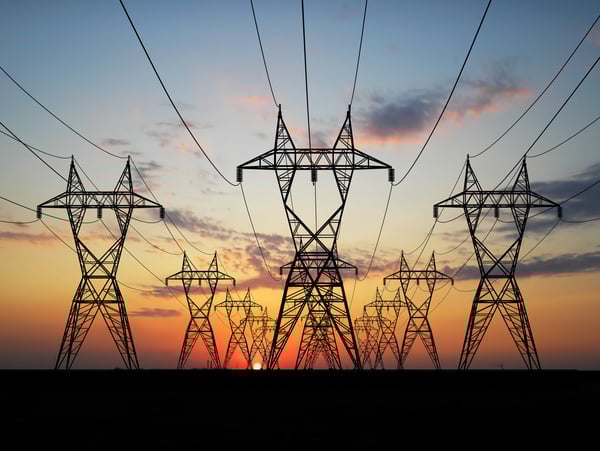
Interconnection Reform Critical to the Efficiency of Energy Markets
The U.S. power grid is undergoing a period of rapid change, with federal agencies such as the Department of Energy (DOE) and the Federal Energy Regulatory Commission (FERC) initiating programs and regulatory actions to address the integration of new generation and transmission resources. According to a recent DOE report, the U.S. grid is facing the retirement of 104 GW of firm capacity (generation that can operate continuously) by 2030, and the planned addition of 209 GW of new generation in the same period. The White House is concerned that the retirement of “baseload” power plants will impede President Trump’s economic goals; as such, press reports say that the administration is expected to issue new emergency orders preventing fossil fuel plants from retiring.






H.R.1: What You Should Know About the Environmental and Energy Provisions in the “One Big Beautiful Bill” Act
On July 4, President Trump signed H.R.1—the “One Big Beautiful Bill,” referred to as the OBBB—into law. This sweeping tax and policy law, enacted through the process of budget reconciliation requiring a simple majority vote by Congress, carries significant implications for environmental funding, clean energy development, and climate-related programs administered by the U.S. Environmental Protection Agency (EPA), as well as the tax code. Much of the provisions affect programs and funding originally authorized under the 2022 Inflation Reduction Act (“IRA”), which was former President Biden’s signature budget reconciliation bill. Below, we outline some of the key features of the OBBB environmental and energy provisions.








White House Solicits Comments on Recommendations for Increased Public Engagement in Federal Rulemaking
On Tuesday, February 7, 2023, the Office of Information and Regulatory Affairs (OIRA) within the White House Office of Management and Budget issued a set of recommendations for broadening public engagement in the federal regulatory process and invited public input on the recommendations through March 10, 2023. The recommendations were developed in response to a commitment to support greater public engagement in the rulemaking process included in the Fifth U.S. Open Government National Action Plan released December 2022. OIRA stated that the recommendations were informed by written submissions and a public engagement session held in November 2022. Thus, OIRA’s solicitation for public input on the recommendations provides a unique opportunity for stakeholders to potentially shape future federal regulatory reform actions.



U.S. Senate Committee on Energy and Natural Resources Holds Hearing on Department of Energy IIJA Implementation
On February 2, 2023, the U.S. Senate Committee on Energy and Natural Resources convened a full committee hearing to examine the U.S. Department of Energy (DOE) implementation of the Infrastructure Investment and Jobs Act (IIJA). The sole witness during the hearing was David Turk, DOE Deputy Secretary. During his remarks, Deputy Secretary Turk noted that the IIJA provided more than $62 billion in funding to DOE and requires DOE to develop 60 new programs and expand funding for 12 existing programs. Deputy Secretary Turks stated that as of January 30, 2023, DOE had solicited 50 Requests for Information for public input on IIJA program design, released 38 Funding Opportunity Announcements worth more than $37 billion in initial investments for IIJA programs, conditionally awarded $1.1 billion in zero-emission energy generation credits, and made available $4.25 billion in formula funding for energy efficiency improvements to state and local governments and tribal nations. With respect to electric transmission, the DOE Grid Deployment Office announced its first Request for Proposals regarding the Transmission Facilitation Program, a $2.5 billion revolving fund program that will help develop new large-scale transmission lines and upgrade existing transmission.